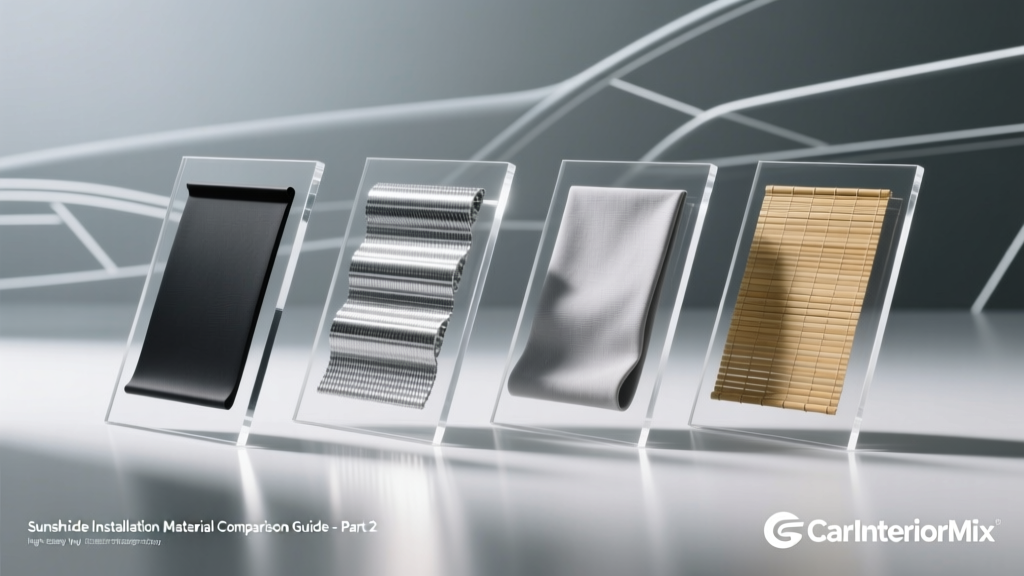
Sunshade Installation Materials Comparison (2026)
If you?ve ever stepped into your car after it?s been parked in direct sun, you already know why sunshades matter. The immediate discomfort is one thing?but the long-term impact on your interior is the bigger story. UV exposure and heat accelerate dashboard cracking, fade upholstery, and can even weaken adhesives in trim pieces and headliners. A quality sunshade helps, but the material it?s made from?and how it?s installed?often determines whether it works consistently or ends up tossed in the back seat.
Part 1 of this series covered sizing and fit basics. This Part 2 guide focuses on the materials used in popular sunshade styles and how those materials affect installation, durability, daily usability, and interior protection. If you?re choosing between a reflective foil pop-up shade, a fabric roll-up, a static-cling film, or an insulated multi-layer panel, this comparison will help you buy once and install with confidence.
You?ll also find step-by-step install tips, real-world examples (what works for commuters vs. weekend cars), common mistakes to avoid, and a quick FAQ at the end. Keywords you?ll see naturally throughout: windshield sunshade, reflective sunshade, static cling sunshade, ceramic tint alternative, heat reduction, UV protection, and sunshade installation.
How Sunshade Materials Change Installation (and Performance)
Sunshades aren?t all ?reflective sheets.? Material choice affects:
- Rigidity: How well the shade holds its shape against the windshield.
- Edge sealing: How tightly it seals around the glass perimeter (a major factor in heat reduction).
- Attachment method: Visors, suction cups, magnets, clips, static cling, or friction fit.
- Durability: Resistance to creasing, delamination, cracking, and UV breakdown.
- Storage behavior: Does it fold, roll, collapse, or stay semi-rigid?
Even the best reflective layer won?t do much if the shade droops and leaves gaps at the top corners. Conversely, a slightly less reflective shade that seals tightly can outperform a shinier one that doesn?t fit.
Material Categories: Pros, Cons, and Best Uses
1) Reflective Foil + Bubble (Mylar/Aluminum Film Laminated to Bubble Core)
This is the classic ?silver bubble? windshield sunshade. It?s lightweight, reflective, and inexpensive?popular for daily drivers.
- Installation feel: Semi-rigid, friction-fit against glass; usually held by sun visors.
- Heat performance: Very good at reflecting radiant heat; sealing depends on cut accuracy.
- Durability: Moderate. Foil can delaminate or tear at folds over time.
- Storage: Folds or rolls; repeated creasing reduces lifespan.
Best for: Commuters, rideshare drivers, and anyone who wants a simple, affordable windshield sunshade that?s quick to deploy.
Real-world example: If you park at an open-air office lot every weekday, this material offers strong heat reduction for the money. The tradeoff is that a $10?$25 shade may need replacing every 1?2 summers if it?s folded aggressively and tossed around.
2) Multi-Layer Insulated Panels (Reflective Outer + Foam/Felt Core + Soft Inner Liner)
These premium shades often use multiple layers: a reflective exterior, insulating foam, and a softer interior-facing fabric that protects glass and trim.
- Installation feel: More structured; better edge contact; often custom-cut for vehicle-specific fit.
- Heat performance: Excellent due to reflection + insulation (slows heat transfer).
- Durability: High. Less prone to tearing; seams and binding matter.
- Storage: Typically folds into panels; bulkier than foil bubble shades.
Best for: Hot climates, vehicles with sensitive interiors (soft-touch dashboards, leather), and owners who keep cars long-term.
Real-world example: A black interior SUV with a steep windshield (common in crossovers) benefits from a structured insulated panel that doesn?t sag. The snug fit reduces the ?hot chimney? effect around the rearview mirror area.
3) Polyester Fabric Roll-Up Shades (Sometimes with Reflective Backing)
Roll-up designs vary: some attach at the top with clips or suction cups; others are designed for side windows rather than windshields. Material is usually polyester with a stitched edge; some include a reflective coating.
- Installation feel: Dependent on mounting method; less rigid than panel shades.
- Heat performance: Good for glare reduction; heat reflection depends on coating quality.
- Durability: Fabric holds up well; suction cups are often the weak link.
- Storage: Excellent?rolls up neatly; great for limited space.
Best for: Drivers who want a tidy storage solution, frequent travelers, and families who need side-window shading for rear passengers.
4) Mesh Sunshades (Primarily Side Windows)
Mesh shades reduce glare and some heat while keeping visibility. They?re common for rear side windows, especially for kids or pets.
- Installation feel: Usually static cling, suction cups, or slip-on sock style for door frames.
- Heat performance: Moderate. Great for glare; less effective than reflective materials for heat reduction.
- Durability: Good; mesh doesn?t crack, but edges can fray.
- Storage: Easy?folds flat.
Best for: Child comfort, pet comfort, and drivers who want shade without fully blocking visibility.
5) Static Cling Reflective Films (Temporary ?Sticker? Style)
These use electrostatic cling rather than adhesive. They?re commonly used on side windows; windshield use is less common and may be restricted depending on local laws.
- Installation feel: Clean-window dependent; positioning must be careful to avoid bubbles.
- Heat performance: Varies widely; reflective versions can be strong for direct sun angles.
- Durability: Good if kept clean; edges can collect dust and lift.
- Storage: Must be stored flat on the backing sheet to avoid creases.
Best for: Seasonal use, renters, and drivers who want a semi-permanent shading option without committing to tint.
Quick Comparison Table (What to Choose for Your Use Case)
- Best value daily windshield shade: Reflective foil + bubble core
- Best heat reduction and fit: Multi-layer insulated, vehicle-specific panels
- Best compact storage: Fabric roll-up shades
- Best for kids/pets (rear seats): Mesh side-window shades
- Best ?temporary film? alternative: Static cling reflective sheets (mostly side windows)
Step-by-Step: Installing a Windshield Sunshade (By Material Type)
A) Reflective Foil + Bubble Shade (Friction Fit + Visors)
- Unfold fully outside the car first if possible. This reduces fumbling and prevents accidental creases.
- Sit in the driver seat and align the top edge just under the headliner/windshield top border.
- Center around the rearview mirror area. If there?s a mirror cutout, use it. If not, tuck carefully and avoid bending the shade around sensors.
- Press the shade into the glass corners?especially the top corners where heat pours in.
- Flip both sun visors down to clamp the shade against the glass.
- Check for gaps at the A-pillars and dashboard line. Small gaps can mean big heat leaks.
Tip: If the shade constantly falls, it?s usually undersized or too soft from age. Upgrading to a thicker core or a custom-cut shade fixes that more effectively than adding suction cups.
B) Multi-Layer Insulated Panel Shade (Custom Fit Panels)
- Identify the ?top? and ?inside? layers (soft liner should face your interior; reflective layer faces outward).
- Start with the mirror/sensor area. Seat the cutout first so the rest of the shade lands correctly.
- Work outward toward the top corners, then press the bottom edge against the dash line.
- Use visors to lock it in place unless the design includes integrated clips or a rigid press-fit.
- Close-check fit along the edges. A premium shade should contact the perimeter with minimal daylight showing.
Tip: If you have a dash-mounted phone holder or parking pass, make sure the shade doesn?t snag it. Removing small accessories from the glass area improves seal and prevents wear on the shade?s binding.
C) Static Cling Sunshade Film (Mostly Side Windows)
- Clean the glass thoroughly with an ammonia-free cleaner. Residue is the main cause of bubbles and peeling.
- Dry with a lint-free microfiber towel. Paper towels can leave fibers that create bumps.
- Peel and position from the top edge first, letting the film hang naturally before pressing down.
- Use a soft card or squeegee to push air outward from the center to the edges.
- Trim only if the product allows it (some clings fray if cut poorly). Use sharp scissors or a precision blade.
Tip: Keep the backing sheet. When you remove the cling shade, store it on the backing so it stays flat and dust-free.
Product Recommendations (Material-Focused Picks)
Rather than a single ?best? sunshade, the right choice depends on how you park and how often you?ll use it. Here are reliable categories to shop for:
- For maximum performance: Vehicle-specific, multi-layer insulated windshield shades (look for a foam core, stitched edging, and a mirror cutout). These often cost more but last longer and seal better.
- For budget-friendly daily use: Thick reflective bubble-core shades with reinforced edges. Choose a size that matches your windshield dimensions, not just ?SUV? or ?sedan.?
- For rear passengers: Mesh side-window shades with a secure attachment method (static cling or frame ?sock? styles). Prioritize coverage and ease of removal.
- For a tint-like removable option: High-quality static cling reflective sheets for side windows. Check local regulations and make sure visibility is acceptable.
Shopping checklist:
- Mirror/sensor compatibility (especially with ADAS camera housings)
- Edge binding quality (prevents tearing and curling)
- Core thickness (affects rigidity and insulation)
- Storage style that matches your habits (fold vs roll vs pop-up)
- Odor-free materials (cheap foams can smell strongly in heat)
Common Mistakes to Avoid
- Buying by vehicle type instead of windshield measurements. ?Compact SUV? can mean wildly different windshield shapes.
- Ignoring the rearview mirror/sensor area. Forcing a shade around camera housings leads to gaps and warping.
- Relying on suction cups in extreme heat. They often fail on hot glass and leave rings or residue.
- Folding reflective foil shades along random lines. This creates weak points that split and peel. Fold along existing creases only.
- Installing static cling film on dirty glass. Dust causes bubbles, and bubbles cause peeling.
- Leaving the shade pressed against hot trim repeatedly. Over time, constant pressure on sharp trim edges can cut binding and reduce lifespan.
Practical Tips for Better Heat Reduction (Beyond the Shade)
- Pair a windshield sunshade with cracked windows (slightly) when safe. Venting helps heat escape; even a small gap reduces interior peak temps.
- Use a rear window shade if you have a hatchback. Large rear glass areas act like magnifiers.
- Combine with quality window tint where legal. A sunshade handles parked heat; tint helps while driving and reduces UV year-round.
- Park with the windshield facing away from the sun whenever possible. Orientation can make a bigger difference than you?d expect.
FAQ: Sunshade Materials and Installation
1) Do thicker sunshades always reduce more heat?
Not always, but thicker multi-layer shades usually perform better because they both reflect radiant heat and slow heat transfer. A thin reflective shade can still work well if it seals tightly to the windshield with minimal gaps.
2) Are static cling sunshades safe for power windows?
Yes, if they?re designed for the window area and applied correctly. The key is making sure edges aren?t loose where they can catch as the window moves. For side windows that roll down often, removable mesh shades may be less hassle.
3) Why does my foil bubble sunshade keep falling down?
Common causes are undersizing, loss of rigidity from age/creased folds, or a windshield angle that needs a stiffer panel. Try a thicker core shade or a vehicle-specific insulated panel, and use visors to clamp it firmly.
4) Can a sunshade replace ceramic tint?
A windshield sunshade is great for parked heat reduction, but it doesn?t help much while driving. Ceramic tint (where legal) reduces heat and UV all the time. Many owners use both: tint for daily protection, sunshade for peak parked heat.
5) What?s the best sunshade material for very hot climates?
Multi-layer insulated panel shades with a reflective exterior and foam core tend to perform best, especially when they?re custom-fit to your windshield shape. They seal better, droop less, and hold up longer in intense sun.
Conclusion: Choose the Material That Matches Your Routine
If you use a sunshade every day, prioritize a material that installs quickly and seals consistently. For many drivers, that means either a thicker reflective bubble-core shade that fits properly or stepping up to a multi-layer insulated panel for better edge coverage and longevity. If your main goal is passenger comfort, especially for kids in the rear seats, mesh side-window shades are often the most practical choice.
Next steps:
- Measure your windshield (width and height) and note mirror/sensor placement.
- Pick a material category that matches your climate, storage space, and how often you?ll install it.
- Test fit and adjust for gaps?your ?seal? matters as much as the reflective surface.
- Pair your shade with smart habits like parking orientation and (where legal) quality tint.
Want more practical interior protection guides, product comparisons, and install tips? Explore the latest articles at carinteriormix.com.